
Laminate vs vinyl flooring is mainly a choice between room conditions and personal priorities. Laminate can deliver a realistic wood look and strong scratch resistance. Meanwhile, vinyl flooring often suits areas with frequent spills or higher moisture. Therefore, the right flooring is the option that matches your room, maintenance habits, comfort needs, and installation requirements.
Compare Daily Performance Before Selecting Your New Floor
First, think about how the room works each day. A quiet bedroom has different needs from a busy hallway. Likewise, an office may need better support for furniture and rolling chairs.
Laminate flooring usually has a wood-fiber core, printed design, and protective wear layer. Therefore, it can copy wood, stone, or tile. Many products resist common scratches well. However, dropped objects may still damage the surface.
Vinyl flooring comes in sheets, tiles, and planks. Some products are flexible, while others use a rigid core. Therefore, comfort can vary. You can explore modern floor colors and styles before narrowing your choices.
At Santiago’s Hardwood Flooring Inc, we suggest comparing products by intended use, not thickness alone. Wear layers, core materials, installation, and care all affect performance.
- Check the room’s foot traffic and furniture load.
- Review scratch, stain, and dent resistance.
- Confirm whether the product suits residential or commercial use.
- Compare warranty limits before making a final choice.
Match Water Resistance With Each Room’s Real Conditions
Moisture can quickly change which material makes sense. Therefore, waterproof laminate vs vinyl plank should be compared using actual product instructions. Labels alone do not tell the whole story.
Standard laminate can swell when water reaches its wood-based core. Some products handle more water exposure. However, check approved rooms, cleanup times, edge sealing, and installation rules.
Vinyl generally handles surface water well. Even so, waterproof planks do not make the full floor system waterproof. Seams and the subfloor still need attention. Therefore, clean spills quickly.
If you are deciding between laminate or vinyl for kitchen areas, consider spills, leaks, cleaning, and comfort. Vinyl often makes sense when water is a main concern. However, approved laminate can also work when its water rules are followed.
- Read the manufacturer’s approved-room guidance.
- Check the subfloor before installation begins.
- Clean spills quickly, even on water-resistant surfaces.
- Follow every sealing, gap, and underlayment requirement.
Estimate Full Project Needs Before Comparing Flooring Costs
Laminate vs vinyl flooring cost varies by product grade, room size, and installation needs. Therefore, a fair comparison should include the whole project, not only the material price.
At Santiago’s Hardwood Flooring Inc, we look beyond each plank’s cost. Removal, subfloor work, trim, transitions, and moisture control can change the total. Underlayment or adhesive may also be required.
- Measure the room and allow extra material for cuts.
- Plan removal and disposal of the old floor.
- Check subfloor repairs, leveling, and moisture control.
- Confirm approved underlayment, adhesive, trim, and transitions.
- Include installation labor and final finishing details.
A lower material price may not produce the lowest completed project cost. Therefore, compare suitability, maintenance, and expected performance alongside the estimate.
Follow Simple Steps For A Better Flooring Installation
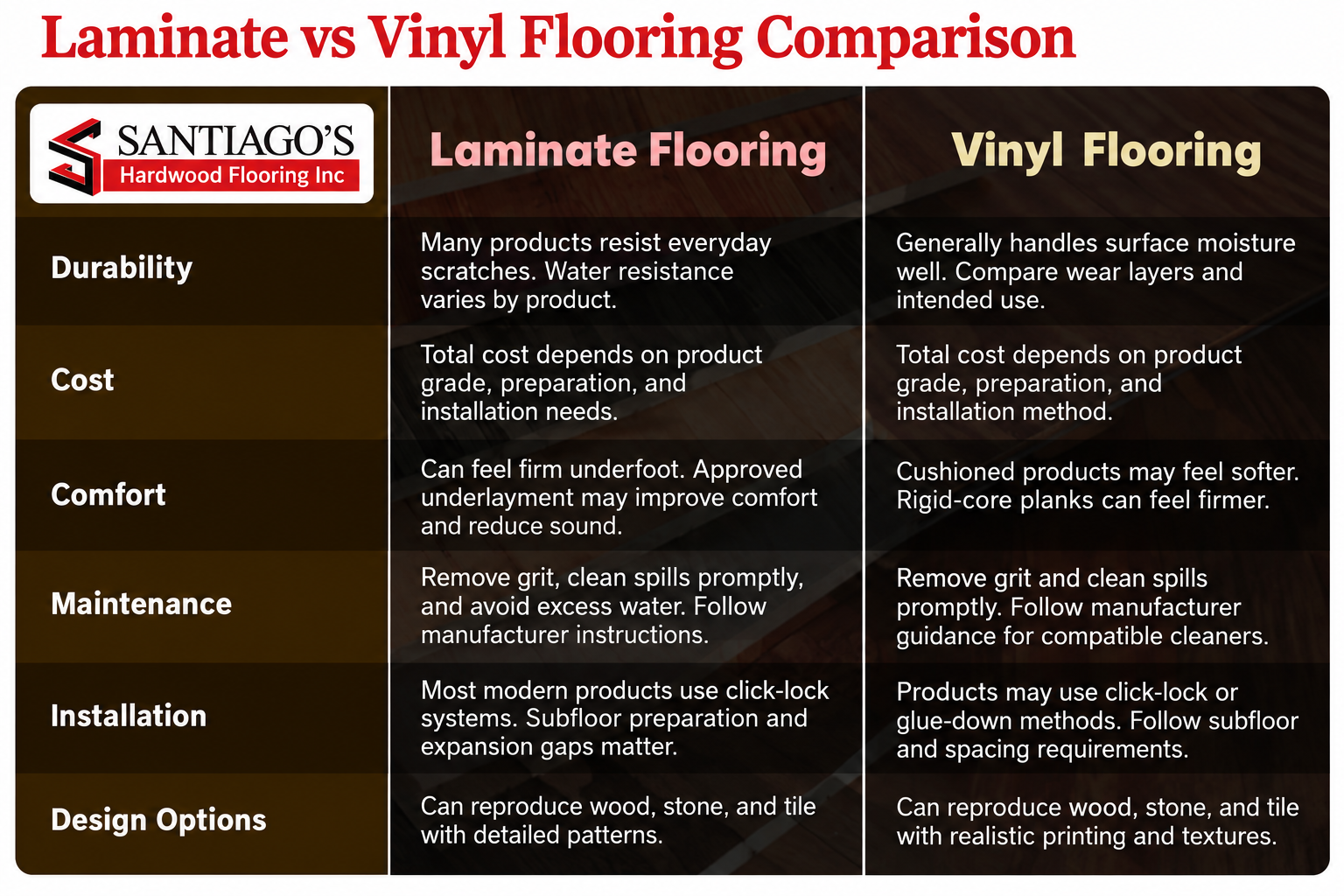
Preparation matters for both materials. Most modern laminate uses a click-lock floating system. Vinyl planks may use click-lock, glue-down, or another approved method. However, every product still depends on a suitable base.
For laminate projects, preparation and expansion gaps matter greatly. Our six-step installation guide explains the basic process. Meanwhile, vinyl installation should follow the manufacturer’s method for the selected product.
First, check whether the subfloor is clean, stable, and flat. Next, review moisture limits and underlayment rules. Then, plan transitions and expansion space. Finally, follow the product instructions.
Vinyl can also react to temperature changes. Therefore, it helps to understand how plank movement can happen before installation. Proper spacing and product guidance remain important.
Protect Comfort And Appearance With Smart Material Choices
Comfort depends on construction and what sits below the finished surface. Laminate can feel firm underfoot. However, approved underlayment may reduce sound and improve the feel.
Vinyl also varies by construction. Some cushioned products feel softer, while dense rigid-core planks feel firmer. Therefore, compare samples instead of assuming every vinyl product feels the same.
Design also matters. Both flooring options can copy wood, stone, and tile. Laminate can show detailed grain patterns. Meanwhile, modern vinyl can use realistic printing and textured surfaces.
At Santiago’s Hardwood Flooring Inc, we encourage comparing samples inside the room. Lighting, cabinets, plank width, and texture can change the final appearance.
Maintain Each Surface With Simple Everyday Cleaning Habits
Regular care can protect either surface. First, sweep or vacuum often to remove grit. Then, clean spills quickly. Always follow the manufacturer’s cleaning instructions.
For laminate flooring, avoid excess water. A lightly damp cleaning method may be suitable when the manufacturer allows it. For vinyl flooring, use compatible cleaners and avoid leaving standing water simply because the surface resists moisture.
Furniture pads and entry mats can reduce scratches. In addition, check product guidance before using wax, polish, or steam.
At Santiago’s Hardwood Flooring Inc, we can help you compare care needs before choosing a material. If you want local help with laminate, review our local laminate flooring support.
Choose Flooring Options That Suit Your Whole Property
Laminate vs vinyl flooring becomes easier to compare when you focus on each room first. Laminate may suit spaces where wood appearance and scratch resistance matter. Vinyl may be stronger for rooms where spills and regular cleaning are bigger concerns.
Also, think about bedrooms, offices, living rooms, kitchens, and lower levels separately. One material does not need to cover the entire property. Instead, each room can use the right flooring for its own needs.
At Santiago’s Hardwood Flooring Inc, we recommend balancing durability, water exposure, comfort, design, and total installation needs. If your project needs a closer discussion, tell us about your flooring plans so we can understand what you need.
Frequently Asked Questions
Is laminate or vinyl better for kitchens?
Vinyl often suits kitchens because it handles surface moisture well. However, approved laminate can also work with proper care. Review current vinyl design choices while comparing appearance and room needs.
Can laminate flooring handle moisture safely?
Some products are made for greater water resistance, but rules vary. Therefore, always follow the manufacturer’s limits. Our laminate project guidance in Malvern can help you understand local service options.
Does vinyl plank need room to expand?
Yes, some vinyl products can move with temperature changes. Therefore, correct spacing and installation rules matter. Learn more about vinyl plank expansion basics before planning the work.
Can I install laminate over an existing floor?
Sometimes, but only when the product instructions allow it. The base must also be stable, flat, and suitable. Our laminate installation steps explain the main preparation process.
How do I start choosing the right flooring?
Start with traffic, moisture, comfort, design, and maintenance needs. Then, compare products approved for that room. You can also review common flooring questions before deciding on your next step.
References:
Better Homes & Gardens: Best Types of Flooring for Your Home