
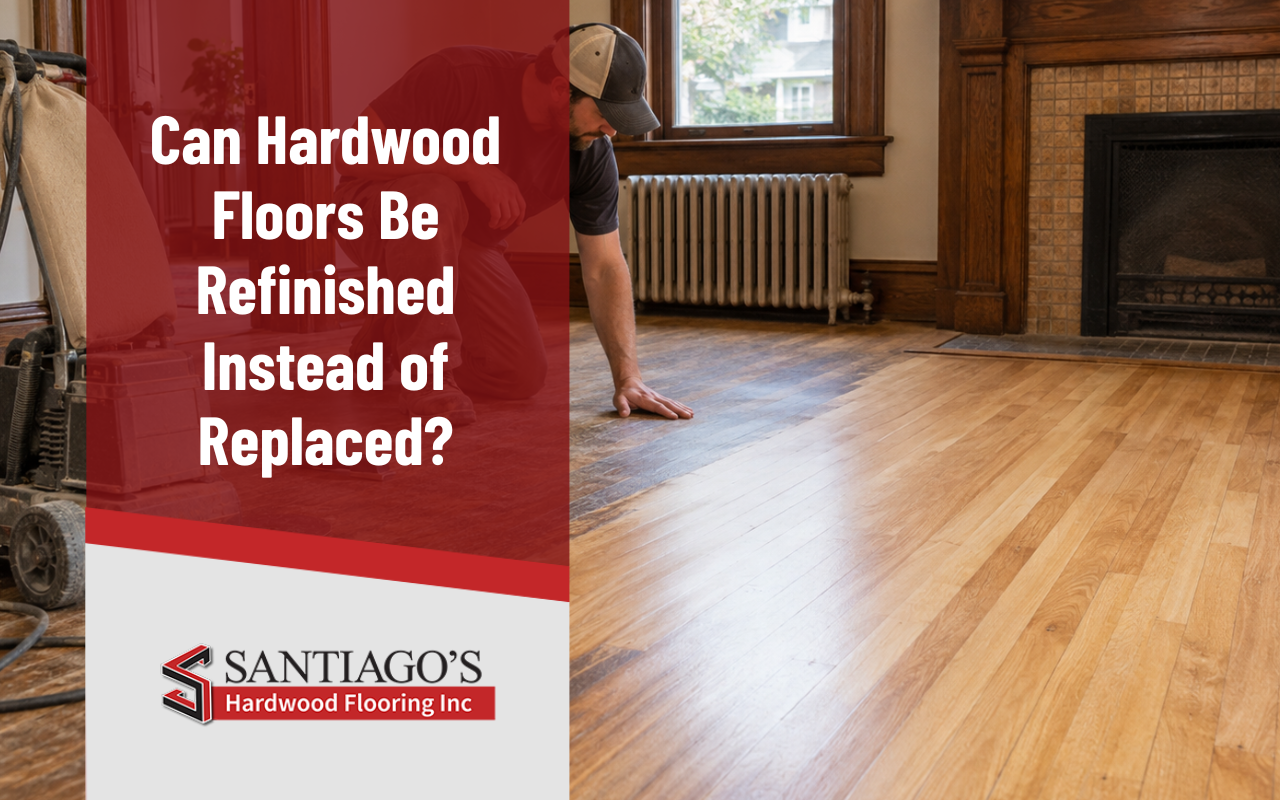
Yes, can hardwood floors be refinished instead of replaced is often answered by checking the condition beneath the worn finish. If the boards remain solid, refinishing can remove surface damage and reveal fresh wood. Therefore, many floors can gain a renewed appearance without removing the original boards.
However, every floor is different. Deep water damage, major movement, broken boards, or very thin wood may change the answer. At Santiago’s Hardwood Flooring Inc, we consider both appearance and condition before recommending the next step.
Recognize Clear Signs Your Hardwood Can Handle Refinishing
First, look closely at the surface. Many signs hardwood can be refinished are easy to see. Scratches, dull areas, light stains, and faded finish often affect only the upper layer.
Therefore, worn appearance does not always mean the wood has failed. Instead, the protective finish may simply need renewal.
- Light or moderate scratches cover several areas.
- The finish looks dull in busy rooms.
- The color has faded from sunlight or daily use.
- Small marks remain mainly on the surface.
- The boards still feel firm under your feet.
Also, floor thickness matters because sanding removes a small amount of wood. Our guide to the best hardwood floor for refinishing explains why wood type and remaining thickness matter.
At Santiago’s Hardwood Flooring Inc, we believe an inspection should come before a major flooring decision. Therefore, homeowners can avoid replacing good wood simply because its surface looks old.
Compare Refinishing Benefits Before Choosing Full Floor Replacement
Next, consider hardwood refinishing vs replacement from a practical point of view. Refinishing keeps most of the existing floor in place. Therefore, fewer materials must be removed and replaced.
Refinishing can also preserve wood with natural grain, age, and character. Meanwhile, replacement begins again with new boards and a new surface.
- Refinishing keeps usable hardwood inside the home.
- It creates less flooring waste than full removal.
- It can refresh color without changing every board.
- It usually causes less construction work inside the room.
- It preserves much of the floor’s original appearance.
However, replacement may make sense when damage reaches beyond the finish. For a broader comparison, read our refinish or replace hardwood floors guide.
At Santiago’s Hardwood Flooring Inc, we want homeowners to understand both choices before work begins. As a result, the final decision can match the floor’s real condition.
Identify Damage That Makes Replacement the Safer Choice
Still, not every hardwood floor should be sanded again. Some hardwood floor replacement signs point to problems below the visible finish. Therefore, these warning signs deserve careful attention.
For example, repeated water exposure may make boards swell, cup, or separate. Likewise, weak or broken boards may need repair or replacement before any surface work begins.
- Several boards are badly warped or split.
- The wood feels weak or unstable when walked on.
- Deep water damage reaches through the boards.
- Large areas have serious gaps or movement.
- The floor has already lost too much sanding thickness.
However, one damaged area does not always mean the entire floor needs replacement. Sometimes, damaged boards can be repaired while the remaining floor is refinished.
Therefore, review the common hardwood repair signs before assuming the whole floor must come out.
Restore Old Hardwood Floors Through a Careful Process
If the wood is suitable, the refinishing process can restore old hardwood floors with several clear steps. First, furniture and rugs must leave the work area. Then, the floor is checked for damage that may need repair.
Next, sanding removes the worn finish and smooths many surface marks. However, sanding must be controlled because too much pressure can damage the boards.
Afterward, the surface must be cleaned carefully. Dust left behind can affect the new finish. Then, a stain may be applied when a different wood tone is wanted.
Finally, a protective finish seals the surface. This coating protects the wood from normal daily wear. As a result, the natural grain becomes clear again.
Our hardwood floor refinishing tips explain these steps and the preparation needed before the work starts.
Follow These Steps Before Starting Your Refinishing Project
A good result begins before the sander touches the floor. Therefore, homeowners should first understand the condition of the wood and the goal for the room.
- Inspect the boards. Look for movement, deep stains, cracks, and worn areas.
- Check the surface. Decide whether damage affects the finish or the wood itself.
- Review previous work. Consider whether the floor has already been sanded many times.
- Choose the appearance. Decide whether to keep the natural tone or use stain.
- Prepare the room. Remove furniture, rugs, and items that may collect dust.
- Plan professional help. Get guidance when damage or floor thickness creates uncertainty.
At Santiago’s Hardwood Flooring Inc, we also consider how different rooms are used. Therefore, the finish should suit both the floor and the household.
Protect Refinished Wood With Simple Daily Floor Care
After refinishing, regular care can protect the renewed surface. Fortunately, hardwood does not require complicated daily treatment. Instead, simple habits can limit scratches, moisture, and dirt.
First, sweep or vacuum often with tools suitable for wood floors. Also, place felt pads beneath furniture legs. Meanwhile, rugs can protect busy entrances and hallways.
Spills should be cleaned quickly because standing moisture can damage wood. However, excessive water during cleaning should also be avoided.
In addition, keep dirt and grit away from the surface. Small particles can act like sandpaper under shoes. Therefore, entrance mats can reduce wear throughout the home.
With good care, a refinished floor can keep its fresh appearance much longer. Consequently, regular maintenance supports the work completed during refinishing.
Choose Professional Guidance for a Confident Flooring Decision
Ultimately, can hardwood floors be refinished instead of replaced depends on what is happening beneath the visible wear. Surface scratches and dullness often support refinishing. However, serious structural damage may require repair or replacement.
At Santiago’s Hardwood Flooring Inc, we focus on finding the option that fits the actual floor. Therefore, we do not believe an old appearance alone should decide the outcome.
A professional review can also identify hidden concerns before sanding begins. For example, floor thickness, loose boards, or moisture damage may affect the plan.
If you are unsure which path fits your home, you can reach our flooring team for guidance about your flooring project.
As a result, you can make a clear decision based on condition rather than appearance alone. In many homes, refinishing can keep beautiful existing hardwood in place for years to come.
Frequently Asked Questions
Can scratches be removed without replacing hardwood floors?
Yes, many surface scratches can be reduced during sanding and refinishing. However, deeper damage may require repair first. Our hardwood floor refinishing tips explain how surface preparation supports a smoother result.
How do I know if hardwood is too damaged?
Look for severe warping, split boards, weakness, or deep moisture damage. Therefore, structural problems need closer inspection. Review our hardwood repair signs to understand common warning signals.
Can old hardwood flooring look new after refinishing?
Yes, refinishing can remove worn finish and many surface marks. As a result, the natural grain can become visible again. Learn more through our best hardwood floor for refinishing guide.
Should I refinish hardwood before considering full replacement?
Often, yes, when the boards remain solid and have enough thickness. However, major structural damage changes the decision. Our refinish or replace hardwood floors guide compares both options in more detail.
Who can inspect my hardwood before I decide?
A flooring professional can review damage, wear, and the condition of the boards. Therefore, an inspection can prevent unnecessary work. You can contact us to discuss your hardwood floor needs.
References:
Architectural Digest — Refinishing Hardwood Floors: A Step-by-Step Guide
Better Homes & Gardens — How Much Does It Cost to Refinish Hardwood Floors?