
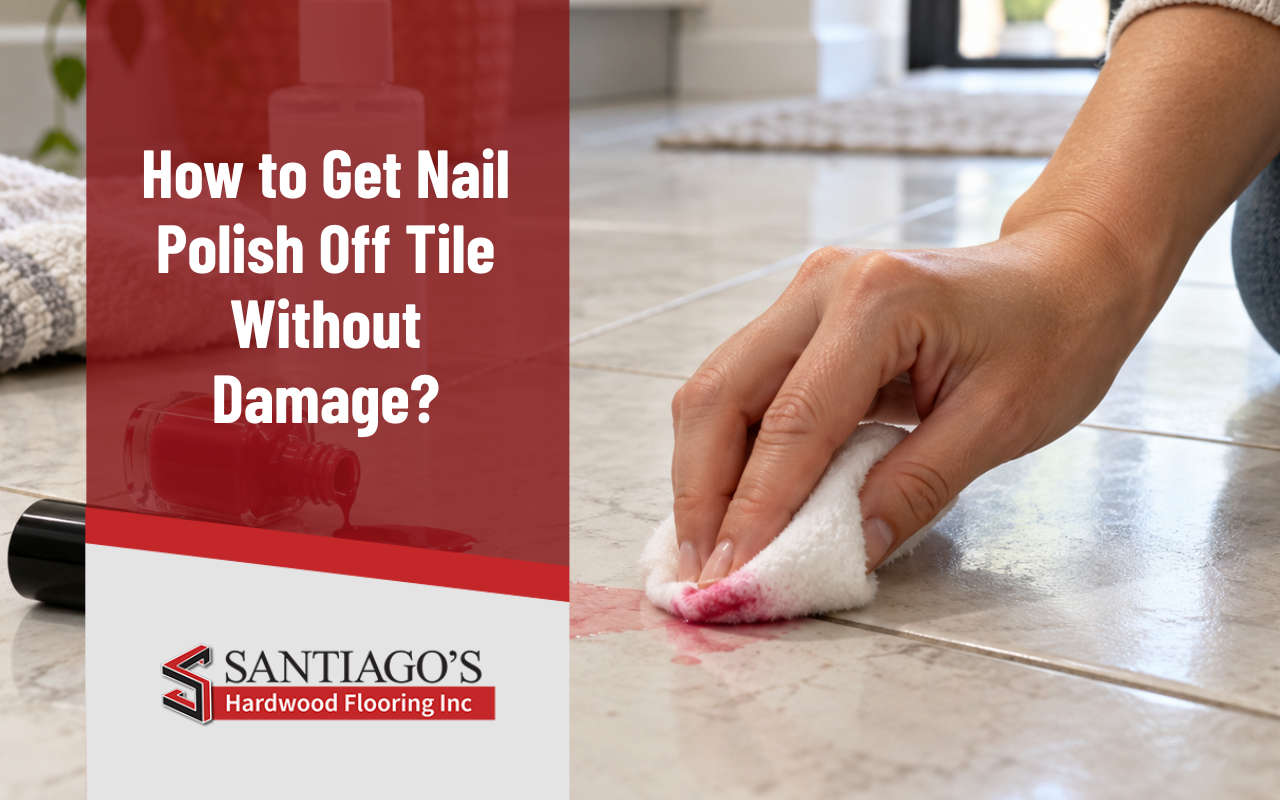
To remove nail polish safely, first lift any loose polish without scratching the surface. Then, test a gentle cleaner in a hidden spot. Next, use only a small amount of stronger remover when needed. Finally, rinse and dry the area well. At Santiago’s Hardwood Flooring Inc, we believe careful cleaning protects both appearance and long-term floor condition.
Identify Tile Type Before Choosing a Safe Cleaner
First, identify whether your floor has porcelain, ceramic, glazed, or unglazed tile. Although these surfaces can look similar, they may react differently to cleaners. Therefore, knowing the material helps you avoid unnecessary damage.
Porcelain is dense and usually absorbs less liquid than many ceramic products. Consequently, a nail polish stain on porcelain tile may remain closer to the surface. However, grout around the tile can absorb color more easily because many cement-based grouts are porous.
Glazed tile also has a protective surface. Still, harsh chemicals or rough tools may affect its finish. Meanwhile, unglazed tile often needs greater care because stains can reach small surface pores.
Before using any cleaner, test a small hidden area. At Santiago’s Hardwood Flooring Inc, we recommend this simple step before treating a visible stain. As a result, you can check for dullness, fading, or texture changes before continuing.
Test Gentle Methods Before Using Stronger Nail Polish Removers
Next, begin with the least aggressive method that may work. This approach reduces the chance of harming the tile, grout, or nearby flooring. Moreover, it gives you better control over the stain.
- First, blot fresh polish with a clean paper towel.
- Then, use mild soap and warm water around the affected area.
- Next, try rubbing alcohol on a hidden test spot.
- Afterward, rinse away cleaner residue with clean water.
- Finally, dry the surface with a soft microfiber cloth.
Many homeowners also ask: Is acetone safe on tile grout? Acetone is commonly used as a solvent in nail polish remover. However, grout may contain sealers or coatings that react differently. Therefore, do not assume acetone is safe for every grout line.
If you choose acetone, use very little and keep it mainly on the tile surface. Also, work in a well-ventilated area and keep it away from heat, sparks, and flames. Acetone is highly flammable, so careful handling is important.
If a spill reaches nearby wood, cleaning methods change completely. Therefore, review our guide to removing polish safely from wood flooring before applying the same product to another surface.
Follow These Steps to Lift Dried Nail Polish
When you need to remove dried nail polish from tile, patience is especially important. Dried polish may require several light treatments instead of one aggressive scrub. Therefore, avoid metal tools, rough pads, or forceful scraping.
- First, wipe away dust and loose dirt from the area.
- Next, soften the stain with a small amount of suitable remover.
- Then, let the product work briefly without flooding the grout.
- Afterward, gently lift softened polish with a plastic edge.
- Next, blot remaining color with a clean white cloth.
- Finally, rinse the tile and dry the entire area completely.
Learning how to get nail polish off tile is often about repeating gentle steps. Therefore, do not increase pressure simply because some color remains. Instead, allow the surface to dry and check your progress before another treatment.
Different flooring materials also need different care. For example, our tile and vinyl flooring comparison explains important differences between common floor surfaces. At Santiago’s Hardwood Flooring Inc, we want homeowners to understand the surface before choosing a cleaning method.
Protect Grout Lines While Treating Stubborn Color Stains
Grout deserves special care because cement-based grout can absorb liquids and stains. Therefore, a small polish spill may leave more color in grout than on the tile itself. Sealed grout can resist stains better, although sealers can wear over time.
For a small grout stain, start with warm water and gentle cleaning. Next, use a soft nylon brush or old toothbrush. However, avoid extremely hard scrubbing because repeated abrasion can wear the grout surface.
Also, be careful with acidic household cleaners. Cement-based grout is alkaline and porous, while repeated acid exposure can weaken its surface. Consequently, strong acidic cleaning may damage grout instead of simply cleaning it.
For normal bathroom floor care, you can also review our simple bathroom floor cleaning methods. At Santiago’s Hardwood Flooring Inc, we encourage surface-specific care instead of using one cleaner everywhere.
Prevent Future Spills With Simple Floor Care Habits
Fortunately, prevention can make future cleanup much easier. Small changes during nail care can protect both tile and grout. Moreover, quick action keeps wet polish from spreading into joints.
- Place a washable towel beneath nail polish bottles.
- Keep bottles away from table and counter edges.
- Close each bottle immediately after use.
- Blot spills quickly instead of rubbing them outward.
- Keep soft cloths and mild cleaner nearby.
Regular floor care also reduces hidden dirt around stained areas. Therefore, sweep or vacuum loose grit before wet cleaning. In addition, use cleaners made for your specific floor instead of relying on harsh general products.
At Santiago’s Hardwood Flooring Inc, we also suggest checking grout for worn or damaged areas during routine cleaning. When grout begins absorbing spills more easily, professional advice may help you decide what care makes sense next.
Know When Professional Floor Care Makes Better Sense
Sometimes, repeated home cleaning does not fully remove the mark. For example, an old stain may remain inside porous grout. Likewise, aggressive cleaners may leave dullness around the treated area.
In those cases, stop adding stronger chemicals without knowing how the surface will react. Instead, professional assessment may prevent a small stain from becoming a larger floor problem. This is especially useful when several flooring materials meet in one room.
For homeowners seeking tile and floor stain cleaning in Broomall, PA, our team understands why protecting the surrounding flooring matters. At Santiago’s Hardwood Flooring Inc, we work with residential and commercial flooring needs throughout our service area.
If you are unsure what a stubborn stain means for your floor, ask our flooring team about the stain before trying another strong product. Therefore, you can discuss the surface and choose a more informed next step.
Ultimately, knowing how to get nail polish off tile starts with gentle action, careful testing, and patience. Although nail polish can look permanent, many stains can improve without rough treatment. Therefore, protect the finish first, control the cleaner carefully, and treat grout separately when necessary.
Frequently Asked Questions
Can acetone remove nail polish from ceramic tile?
Acetone is commonly used to dissolve nail polish. However, always test it first because finishes and grout sealers can differ. For broader floor care guidance, review our bathroom floor care guide.
Does porcelain tile stain easily from nail polish?
Porcelain is generally dense, so many spills remain near the surface. However, grout can absorb pigment more quickly. Therefore, clean spills promptly. You can also explore our guide to common flooring choices for more information about floor materials.
What if nail polish spills onto nearby hardwood?
Wood requires a different approach because strong solvents can affect its finish. Therefore, do not copy the tile method automatically. Instead, read our wood nail polish cleanup guide before treating the area.
When should stubborn floor stains get professional attention?
Consider professional help when staining remains after gentle cleaning or when the surface becomes dull or damaged. Our professional flooring service options explain the types of floor care our team handles.
How can I discuss a difficult floor stain?
If the stain remains or you are unsure about the flooring material, avoid repeated chemical treatments. Instead, discuss your flooring concern with our team so we can understand what you are seeing.
References:
Science in School — Household Chemistry: Solvents and Stain Removers