
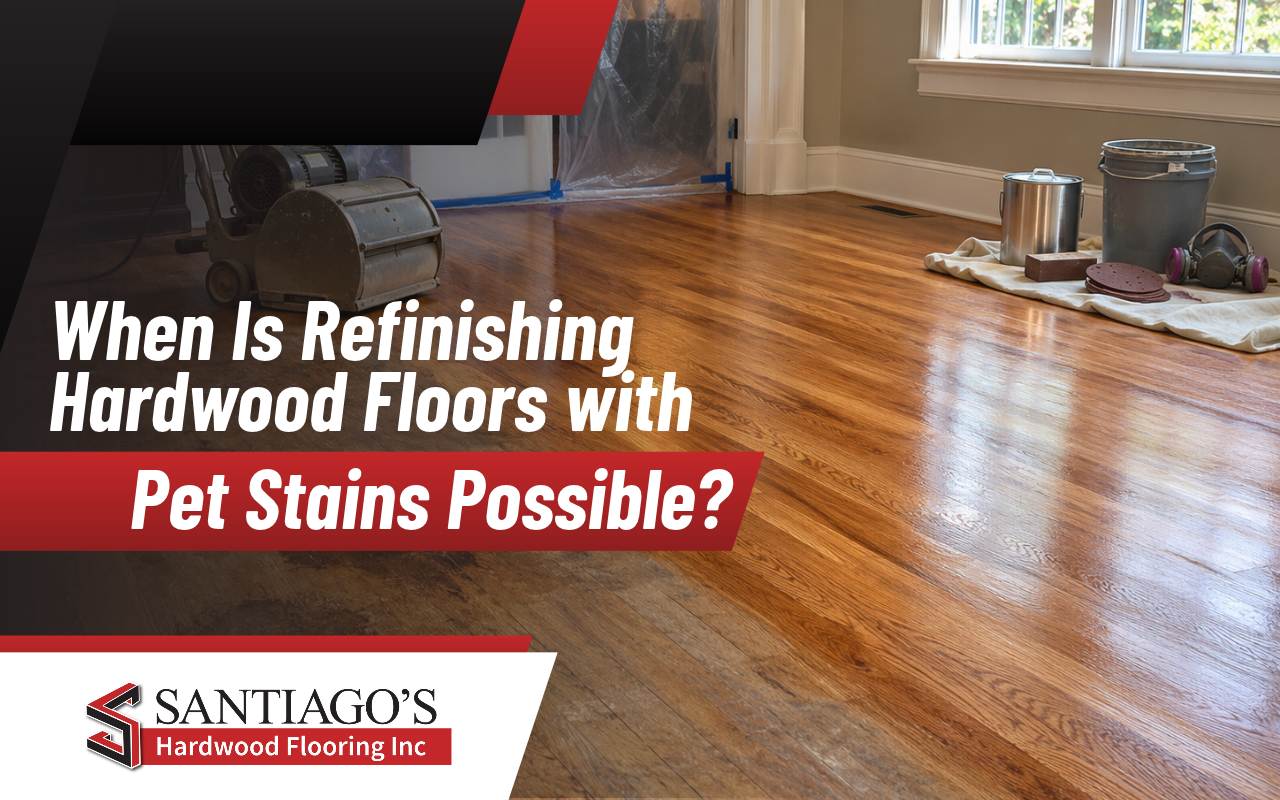
Refinishing hardwood floors with pet stains is possible when urine damage affects the finish or upper wood layers. However, deep discoloration, lasting odors, or weakened boards may require replacement. Therefore, checking the wood’s condition is essential before choosing a restoration method.
At Santiago’s Hardwood Flooring Inc, we focus on preserving usable hardwood whenever possible. Our goal is to help homeowners understand their options while protecting their floors’ natural beauty.
Identify Early Pet Damage Before Selecting Your Restoration Method
First, inspect the entire floor rather than focusing only on obvious stains. Pet urine can pass through worn finishes and enter the wood. Consequently, some damage may extend below the visible surface.
Look for these common warning signs:
- Dark gray or black stains around floorboards.
- Strong odors that remain after cleaning.
- Raised edges or uneven wooden surfaces.
- Cloudy finishes or peeling protective layers.
- Soft or loose boards underfoot.
Next, examine corners, doorways, and areas where pets frequently rest. Also, check around water bowls and places where previous accidents occurred.
A small stain without an odor may only affect the finish. However, deep discoloration with a persistent smell can indicate more serious damage.
Our guide to recognizing hardwood floor repair signs explains other warning signals homeowners should watch for.
At Santiago’s Hardwood Flooring Inc, we consider both visible stains and the boards’ physical condition. This helps us discuss practical restoration options.
Gather Suitable Tools to Support Safe Hardwood Floor Refinishing
Before starting, collect the right equipment and protective materials. Proper preparation helps reduce mistakes and prevents additional damage.
Depending on your floor’s condition, useful supplies include:
- A soft broom and hardwood-safe vacuum.
- Microfiber cloths and approved wood cleaners.
- Painter’s tape and protective plastic sheeting.
- Floor sanding equipment and suitable sandpaper.
- Safety glasses, hearing protection, and appropriate respiratory protection.
- Wood filler, matching stain, and protective finish.
Additionally, identify whether your flooring is solid or engineered hardwood. Some engineered boards have thin wooden surfaces that cannot safely handle repeated sanding.
Therefore, confirm the floor’s construction before using sanding equipment. Always follow product labels and equipment safety instructions.
Prepare Living Spaces to Safeguard Pets During Floor Restoration
First, remove furniture, rugs, pet bedding, and food bowls from the room. Then, clean the floor carefully and allow it to dry completely.
Next, protect nearby openings from sanding dust. Also, inspect the floor for loose nails, staples, and raised boards.
Most importantly, arrange a secure location for your pets during restoration. Sanding noise, airborne dust, and finishing products can create risks for animals.
Keep pets away until the new finish has dried and cured according to its instructions. Remember, a floor that feels dry may not be ready for regular use.
At Santiago’s Hardwood Flooring Inc, we encourage careful preparation before restoration begins. This supports a safer working environment for everyone in the household.
Remove Shallow Urine Discoloration Through Controlled Hardwood Floor Sanding
Homeowners often ask, “can sanding remove pet urine stains?” Fortunately, sanding can improve marks near the wooden surface.
However, urine that has soaked deeply into the boards may leave permanent discoloration. Therefore, sanding results depend on the depth of the stain.
Start with a small test area in a less visible location. Then, use appropriate equipment while keeping the sanding movement even.
Work with the wood grain whenever possible. Additionally, remove dust between sanding passes to examine the surface.
Never sand excessively in one spot to chase a dark mark. Removing too much wood can create uneven areas or weaken the flooring.
For more cleaning information, explore our guide to removing pet stains from hardwood. It explains ways to address common pet-related marks.
Ultimately, sanding works best when the wood remains structurally sound, and the discoloration is relatively shallow.
Treat Persistent Black Marks While Protecting Surrounding Wooden Boards
Black pet stains on hardwood floors often indicate moisture damage beneath the protective finish. Consequently, ordinary cleaning may not remove them.
After sanding, inspect the affected wood under natural light. If dark marks remain, consider a treatment specifically approved for hardwood.
Some wood-safe treatments can lighten discoloration. However, their effectiveness depends on the wood species and stain depth.
Always test treatments in a hidden area first. Furthermore, never mix household cleaning chemicals or soak the floor with strong solutions.
Persistent odors may indicate contamination beneath the visible boards. Therefore, repeated surface cleaning might not solve the underlying problem.
If your floor has stubborn marks, ask our team about persistent hardwood stains. We can discuss the damage and appropriate next steps.
Replace Weakened Floorboards to Preserve Overall Hardwood Floor Stability
Understanding when to replace boards with pet damage is important because refinishing cannot repair every problem.
Replacement may be necessary when moisture has weakened the wood or reached deeper flooring layers.
Watch for these signs:
- Deep black marks that remain after careful sanding.
- Persistent urine odors beneath the boards.
- Soft, cracked, or severely warped wood.
- Loose sections that shift when walked on.
- Damage extending into the underlying subfloor.
Fortunately, damaged boards can sometimes be replaced individually. Therefore, removing the entire floor may not be necessary.
However, matching replacement pieces requires careful attention to wood species, width, grain, and color.
Our comparison of hardwood floor refinishing and replacement explains the main differences between these approaches.
At Santiago’s Hardwood Flooring Inc, we believe preserving sound flooring should remain a priority. However, damaged wood must be addressed before applying a new finish.
Apply Durable Finishes to Improve Everyday Hardwood Floor Protection
Once repairs are complete, choose a suitable stain and protective finish. Stain changes the wood’s color, while finishing products protect against everyday wear.
First, test your selected color on a hidden section. Then, examine it under daylight and indoor lighting.
Next, apply compatible products according to their instructions. Also, allow the recommended drying time between coats.
Although protective finishes reduce everyday wear, hardwood remains vulnerable to standing moisture. Therefore, quick cleanup is still important.
Keep pets and furniture away until the finish has cured sufficiently. This helps prevent premature marks on the restored surface.
Prevent Future Pet Stains Through Consistent Hardwood Floor Care
After restoration, daily habits become essential for protecting your investment. Fortunately, simple cleaning routines can help prevent future damage.
Blot pet accidents immediately with a clean cloth. Then, use a cleaning product approved for your hardwood finish.
Additionally, avoid steam cleaning and excessive water near board seams. These methods may allow moisture to enter the wood.
Trim pet nails regularly to reduce scratches. Also, place suitable washable mats near feeding areas and frequently used entrances.
Check beneath mats occasionally because trapped moisture can damage wood finishes. Likewise, remove dirt regularly with gentle sweeping or vacuuming.
If your pet suddenly has frequent accidents, consider asking a veterinarian about possible health concerns.
With consistent care, your restored floors can remain attractive while supporting everyday family life.
Explore Local Restoration Options for Beautiful Havertown Hardwood Floors
For homeowners considering pet stain hardwood floor restoration in Havertown, PA, identifying the damage is the first step.
Some floors only need surface restoration. However, others require targeted repairs before they can receive a new finish.
At Santiago’s Hardwood Flooring Inc, we understand the importance of protecting your home’s original character. Therefore, we encourage homeowners to compare restoration and replacement carefully.
If replacement boards become necessary, explore our hardwood flooring installation options in Havertown for more information about wood selection.
Ultimately, refinishing hardwood floors with pet stains works best when the correct repair method matches the damage.
If you are unsure about your floor’s condition, tell us about your hardwood flooring concerns. Together, we can discuss the next practical step.
Frequently Asked Questions
Can sanding completely remove pet urine stains from hardwood floors?
Sanding can remove shallow stains, but deeply absorbed urine may leave marks. Therefore, inspect the damage before removing more wood. Our pet stain cleaning and removal guide explains additional cleaning approaches.
How can I tell whether pet-damaged boards need replacement?
Soft wood, severe warping, loose boards, and persistent odors are important warning signs. Also, deep stains may indicate hidden damage. Review our warning signs of damaged hardwood floors for further guidance.
Should I repair, refinish, or replace hardwood floors?
Repair isolated scratches or small stains when boards remain firm. Refinish when pet urine affects the surface. Replace boards with deep stains, persistent odors, or softness. For guidance, review our floor restoration options.
Can replacement hardwood boards match my existing flooring?
Yes, selecting similar wood, grain, and color can improve the match. However, natural differences may remain. Explore our hardwood installation guidance for Havertown homes to understand material choices.
How can I protect refinished hardwood floors from future accidents?
Clean spills promptly, use hardwood-safe products, and prevent standing moisture. Additionally, keep pet nails trimmed and inspect the finish regularly. For specific concerns, discuss your hardwood floor care needs with our team.
References: