
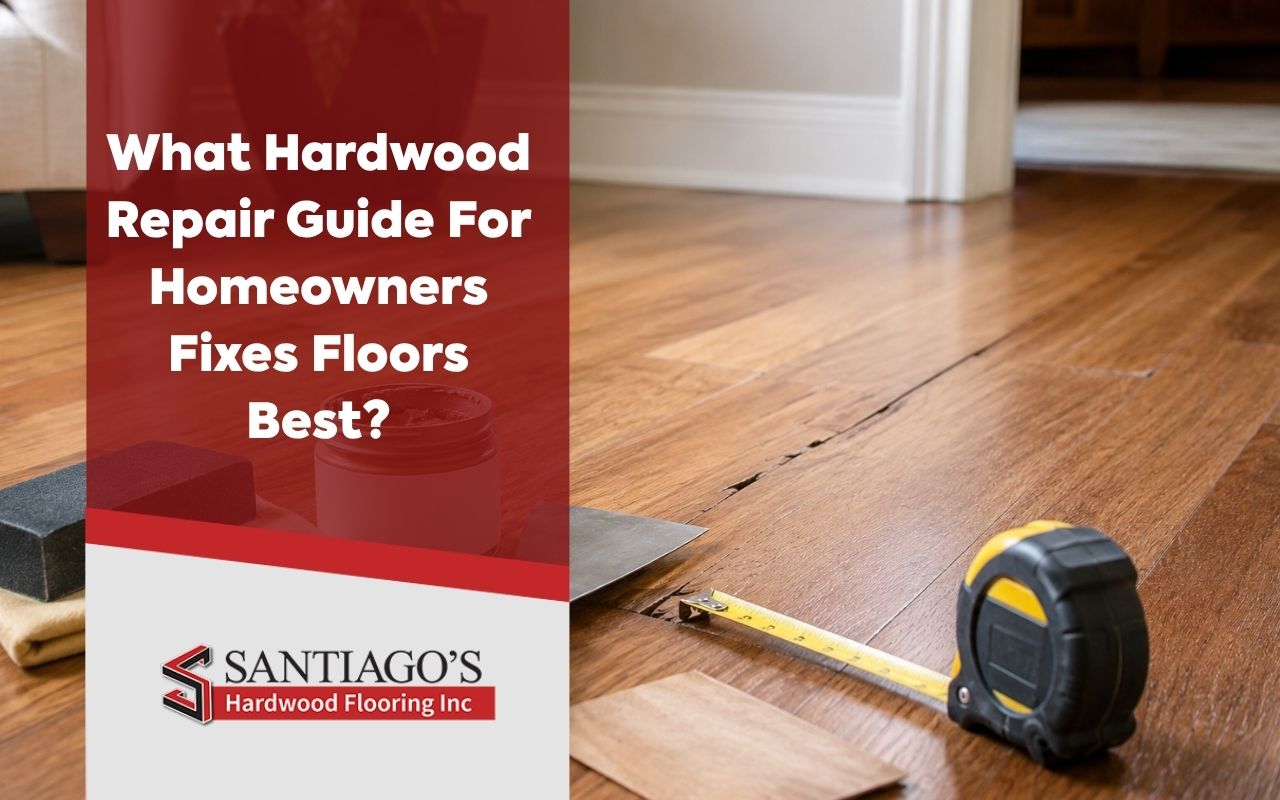
Hardwood floors bring warmth, value, and comfort to your home. However, daily life can leave scratches, dents, gaps, and dull spots behind. At Santiago’s Hardwood Flooring Inc, we created this hardwood repair guide for homeowners to help you understand simple fixes, safer choices, and the right time to ask for help.
What Hardwood Repair Guide For Homeowners Fixes Floors Best?
A hardwood repair guide for homeowners works best when it starts with a clear floor check. Then, it explains which marks are simple and which damage needs expert care. Therefore, you can protect your floor without guessing.
Spot Floor Damage Before Small Problems Grow Quickly
First, walk slowly across each room and listen for creaks. Also, feel for soft, raised, or uneven boards. These signs can point to loose boards, hidden moisture, or heavy wear.
Next, look closely at the finish. If the shine looks thin, raw wood may be exposed. As a result, scratches can grow deeper with daily foot traffic.
At Santiago’s Hardwood Flooring Inc, we suggest checking these common signs:
- Light scratches from shoes, pets, or chairs.
- Small dents from furniture legs or dropped items.
- Dark spots that may show old spills.
- Hardwood floor gaps between boards or along seams.
- Dull areas where the finish has worn down.
Moreover, a quick check helps you know when to repair hardwood. Small marks are easier to fix before dirt and moisture settle in.
Choose Simple Tools That Make Repairs Cleaner Today
Before you begin, gather the right tools. This keeps the work smooth and helps each repair look neater.
For most small repairs, you may need:
- A soft cloth and soft brush.
- Fine-grit sandpaper.
- A putty knife.
- Wood filler or wax filler sticks.
- Matching stain or finish.
- Gloves and safety glasses.
Also, choose products that match your floor color and finish. Otherwise, a small repair may stand out more than the damage.
With Santiago’s Hardwood Flooring Inc, you can ask our team for clear guidance before starting. For more support, visit our flooring support team.
Repair Scratches And Dents With Calm Clear Steps
Wood floor scratch repair begins with cleaning. First, remove dust and grit with a soft cloth. Then, look at the depth of the scratch.
For light surface marks, use a wax filler stick that matches the floor. Rub it gently into the mark. After that, wipe away extra filler before it dries.
For deeper scratches, sand lightly with the grain. Then, clean the area and apply a thin matching finish. However, avoid sanding too hard, since it can change the floor shape.
Dented hardwood floors need a different approach. Small dents may need filler and careful blending. Yet, deep dents may need board repair or refinishing.
At Santiago’s Hardwood Flooring Inc, we help homeowners compare repair options. Therefore, you can avoid making a small dent worse.
Fill Floor Gaps Before Moisture Causes Larger Trouble
Hardwood floor gaps often appear when indoor air changes. In dry seasons, boards can shrink slightly. Then, small spaces may form between them.
For narrow gaps, clean out dust first. Then, press flexible wood filler into the space with a putty knife. After that, smooth the surface and let it dry.
For wider gaps, a thin wood strip may work better. The strip should match the floor as closely as possible. Then, it can be glued, trimmed, sanded, and finished.
However, some seasonal gaps may close when humidity returns. Because of that, do not rush every gap repair. A careful check helps you decide when to repair hardwood and when to wait.
For more guidance, read our floor care steps.
Dry Water Damage Before Boards Lose Their Shape
Water can damage hardwood fast. Therefore, dry the area before adding filler, stain, or finish. Fans and dehumidifiers can help remove trapped moisture.
Next, inspect the boards for cupping, buckling, stains, or soft spots. Light damage may improve with drying and sanding. However, severe damage may need board replacement.
At Santiago’s Hardwood Flooring Inc, we take water damage seriously because hidden moisture can spread. Also, repairs done too soon may fail later.
Use these steps after a spill or leak:
- Blot water right away with a dry cloth.
- Keep air moving across the floor.
- Wait until the wood feels fully dry.
- Check for raised edges or dark marks.
- Call a professional when boards shift or swell.
Restore Shine While Protecting Your Hardwood Investment Daily
A dull floor does not always need full refinishing. Sometimes, deep cleaning and gentle polishing can bring back a warm glow.
First, remove grit with a soft broom or vacuum made for hard floors. Then, use a cleaner made for hardwood. Avoid soaking wet mops, since too much water can harm the finish.
Next, apply floor polish only if it matches your finish type. Also, follow the product directions and let each coat dry fully.
This step supports your hardwood repair guide for homeowners because shine and protection work together. When the finish stays strong, future wood floor scratch repair becomes less common.
Maintain Strong Floors Through Easy Home Habits
Good habits help hardwood last longer. Also, they reduce the need for major repairs.
Place mats at doors to catch grit. Then, add felt pads under chairs and tables. Also, lift furniture instead of dragging it across the floor.
Clean spills right away with a slightly damp cloth. After that, dry the area fully. This helps prevent stains, swelling, and future hardwood floor gaps.
At Santiago’s Hardwood Flooring Inc, we believe small care steps protect your home’s comfort. Because of that, routine checks matter as much as repairs.
For warning signs that need attention, visit our floor warning signs.
Frequently Asked Questions
How do I know when to repair hardwood?
You should repair hardwood when scratches deepen, gaps collect dirt, boards feel loose, or dents expose raw wood. Also, if moisture leaves dark stains or raised edges, act quickly. For help choosing the next step, contact our flooring support team.
Can small scratches be fixed without refinishing everything?
Yes, many small scratches can be fixed with cleaning, wax filler, or light sanding. However, deeper marks may need a stronger repair. Our floor care steps explain simple ways to understand repair needs.
What should I do about hardwood floor gaps?
First, check if the gaps change with the season. Then, clean out debris and consider flexible filler for narrow spaces. For larger gaps, review our floor warning signs before choosing a repair.
Are dented hardwood floors always a serious problem?
No, small dents can often be filled and blended. However, deep dents may weaken the finish and collect dirt. With Santiago’s Hardwood Flooring Inc, we can help you decide if repair or refinishing is better. You can reach us through our flooring team.
Can routine care reduce future hardwood repairs?
Yes, simple habits can protect your floor. Use mats, felt pads, gentle cleaning, and quick spill cleanup. Also, our home flooring guidance can help you explore more care and service options.
Protect Beautiful Floors With Timely Repair Choices
A hardwood repair guide for homeowners gives you a clear path when floors look worn. First, inspect the damage. Then, match the repair to the problem. Finally, ask for help when water, deep dents, or wide gaps appear.
At Santiago’s Hardwood Flooring Inc, we want every homeowner to feel confident about floor care. Therefore, we focus on clear guidance, honest support, and lasting results.
This hardwood repair guide for homeowners can help you protect beauty, comfort, and value. Also, it helps you know when to repair hardwood before small issues become larger repairs.
References:
We Asked Reno Pros How to Get Rid of Scratches on Wood Floors
Experts Say This Everyday Habit Is Ruining Your Hardwood Floors