
Summer heat and moisture can change how wood floors look and feel. Therefore, choosing the right material matters. At Santiago’s Hardwood Flooring Inc, we compare wood structure, room conditions, finishes, and daily use. This guide explains which options can remain beautiful, stable, and comfortable during warm, humid months.
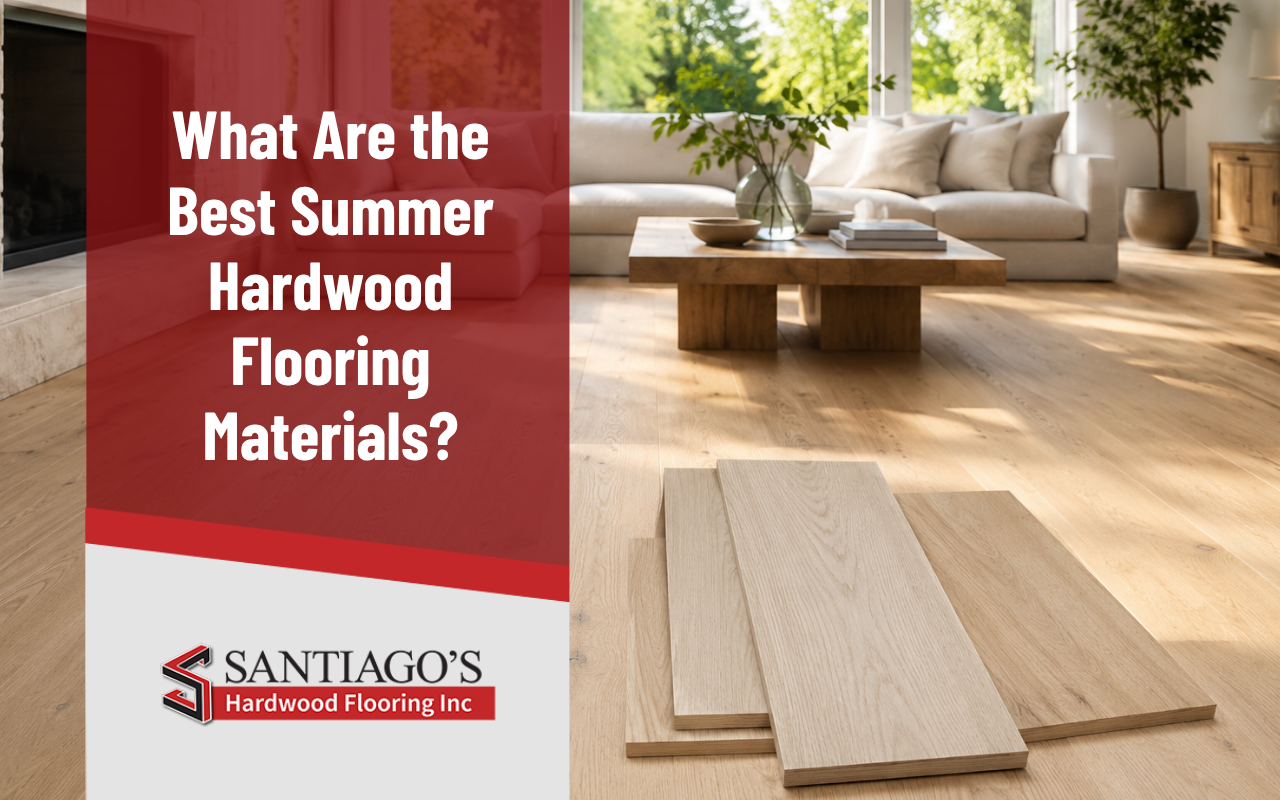
What Are the Best Summer Hardwood Flooring Materials?
The best summer hardwood flooring materials include engineered hardwood, white oak, hickory, maple, and teak. These options offer better stability during warm, humid conditions. However, proper installation, finishing, and indoor moisture control remain essential for lasting results.
Choose Stable Woods That Handle Summer Humidity Better
Wood naturally reacts to moisture in the air. Therefore, boards may expand when humidity rises. They may also shrink when indoor air becomes dry.
At Santiago’s Hardwood Flooring Inc, we consider these seasonal movements before recommending a floor. We also review the room location, sunlight, subfloor, and household activity.
Several stable hardwood species perform well during summer:
- White oak has a strong structure and attractive grain.
- Hickory is dense and handles active households well.
- Maple offers a smooth surface and a bright appearance.
- Teak contains natural oils that limit moisture absorption.
- Mahogany has a tight grain and good natural stability.
However, no natural wood is completely waterproof. Proper preparation, installation, and finishing remain essential. Our guide to learn the main benefits of the best wood flooring types can help you compare popular species.
Compare Engineered Boards for Greater Seasonal Floor Stability
Engineered hardwood has a real wood surface over several supporting layers. As a result, its layered structure limits movement during humidity changes.
Therefore, engineered boards often work well in hardwood flooring in humid climates. They can also suit basements, concrete subfloors, and rooms with changing temperatures.
Solid hardwood still offers lasting value and natural beauty. Moreover, many solid floors can be sanded and refinished several times. However, solid boards usually need closer moisture control.
Consider these differences before choosing:
- Engineered boards usually resist seasonal movement better.
- Solid boards often allow more future refinishing.
- Engineered flooring may work better over concrete.
- Solid flooring usually performs best in controlled rooms.
- Both options need correct acclimation before installation.
At Santiago’s Hardwood Flooring Inc, we help homeowners balance appearance, room conditions, and long-term plans. You can also explore best hardwood floor materials for Broomall homes for more local guidance.
Select Protective Finishes That Reduce Everyday Moisture Damage
A strong finish creates a protective layer over the wood. Therefore, it can slow moisture entry and guard against common spills.
Water-based polyurethane dries quickly and keeps the wood color clear. Meanwhile, oil-modified polyurethane adds a warmer tone and strong surface protection.
Penetrating oils can also highlight natural grain. However, they may need more regular care. Wax creates a soft appearance, although it usually needs frequent attention.
For busy homes, consider these finish features:
- Good resistance against scratches and everyday wear
- A sealed surface that supports easier cleaning
- A sheen level that matches the room design
- A curing period that fits the household schedule
- Clear care instructions from the product maker
Moisture-resistant hardwood still needs a suitable finish. Therefore, every layer should support the room’s actual use and summer conditions.
Follow Simple Steps to Prepare Floors Before Installation
Correct preparation helps summer hardwood flooring materials settle into the home. It also lowers the chance of gaps, lifting, or cupping later.
How to prepare hardwood flooring for summer installation
- First, measure the room’s temperature and humidity.
- Next, inspect the subfloor for moisture or uneven areas.
- Then, place the flooring indoors for proper acclimation.
- Afterward, follow the maker’s storage and spacing instructions.
- Finally, choose an installation method suited to the subfloor.
Never rush acclimation because every product has different requirements. Likewise, do not install boards over a damp or damaged base.
Our team at Santiago’s Hardwood Flooring Inc can review these conditions before work begins. For professional support, explore our services and find the right next step for your home.
Maintain Balanced Indoor Conditions for Longer Floor Life
Consistent indoor conditions support better floor performance. Therefore, use air conditioning or a dehumidifier when summer moisture becomes high.
Seasonal wood floor care should also include gentle cleaning. Sweep or vacuum often because sand and grit can scratch the finish.
Additionally, use only a slightly damp mop. Standing water can enter board edges and cause damage. Clean every spill quickly, even on sealed flooring.
Simple protection habits include:
- Placing mats near exterior doors
- Adding felt pads under furniture legs
- Using breathable pads beneath area rugs
- Closing windows during very humid weather
- Checking rooms for leaks or damp areas
Humidity can affect board shape, gaps, and surface condition. Therefore, read how humidity affects wood floors for practical prevention advice.
Brighten Warm Rooms With Lighter Hardwood Color Choices
Light-colored wood can make a room feel open and fresh. Moreover, pale floors reflect more natural light than very dark surfaces.
Maple, ash, and light white oak work well with simple summer décor. They also pair naturally with sheer curtains, soft fabrics, and neutral furniture.
However, color alone does not control room temperature. Ventilation, window coverings, insulation, and indoor moisture remain important.
At Santiago’s Hardwood Flooring Inc, we consider both style and practical needs. Therefore, customers can choose a floor that supports the room throughout every season.
Protect Busy Areas With Breathable Rugs and Mats
Area rugs reduce scratches in entryways, halls, and living rooms. Additionally, they catch dirt before it spreads across the floor.
Natural fiber rugs can work well during summer because many allow better airflow. However, the rug pad must also breathe and remain dry.
Rotate rugs occasionally to reduce uneven sunlight exposure. Also, check underneath them for trapped moisture after spills or humid weather.
Water-resistant runners may help near kitchens or doors. Still, avoid coverings that trap dampness against real wood for long periods.
Support Sustainable Homes With Responsible Hardwood Material Options
Responsible flooring can combine beauty, durability, and environmental care. For example, certified wood comes from forests managed under defined standards.
Reclaimed wood is another useful option. It reuses existing boards and often brings unique marks, colors, and grain into the home.
Bamboo and cork are renewable alternatives, although they are not traditional hardwood species. Their quality and moisture performance can also vary by product.
Therefore, review the product source, construction, finish, and care needs. A durable choice that lasts longer can also reduce future material waste.
Preserve Lasting Beauty Through Smart Summer Floor Decisions
The right summer hardwood flooring materials should match the room and local conditions. Therefore, consider stability, construction, finish, and maintenance together.
Engineered hardwood can provide added stability in changing moisture. Meanwhile, white oak, hickory, maple, and teak offer useful natural qualities.
Still, installation quality remains just as important as material choice. At Santiago’s Hardwood Flooring Inc, we explain each option before the project starts.
With careful seasonal wood floor care, your floor can stay attractive throughout summer. It can also remain comfortable and dependable during the rest of the year.
When you are ready to compare materials, get in touch with our team. We will help you plan a floor that suits your home and daily life.
Frequently Asked Questions
Which hardwood materials work best during humid summers?
Engineered hardwood, white oak, hickory, maple, and teak are strong options. However, room conditions and installation quality also affect performance. Learn the main benefits of the best wood flooring types before selecting a species.
Is engineered hardwood better for changing summer humidity?
Engineered hardwood often moves less than solid wood during moisture changes. Therefore, it can suit basements, concrete bases, and humid rooms. Our services page explains how we can support your flooring project.
How does humidity affect real hardwood flooring?
High humidity can cause wood to absorb moisture and expand. Meanwhile, dry conditions can create shrinkage or gaps. Learn more about how humidity affects wood floors.
What daily care protects hardwood floors during summer?
Sweep regularly, clean spills quickly, and avoid excess mop water. Additionally, use furniture pads and control indoor moisture. For more daily care guidance, read hardwood floor maintenance: tips for lasting shine.
Where can homeowners request help choosing flooring materials?
Homeowners can discuss room conditions, wood types, finishes, and installation needs with our team. To begin, get in touch with our team.
References: