
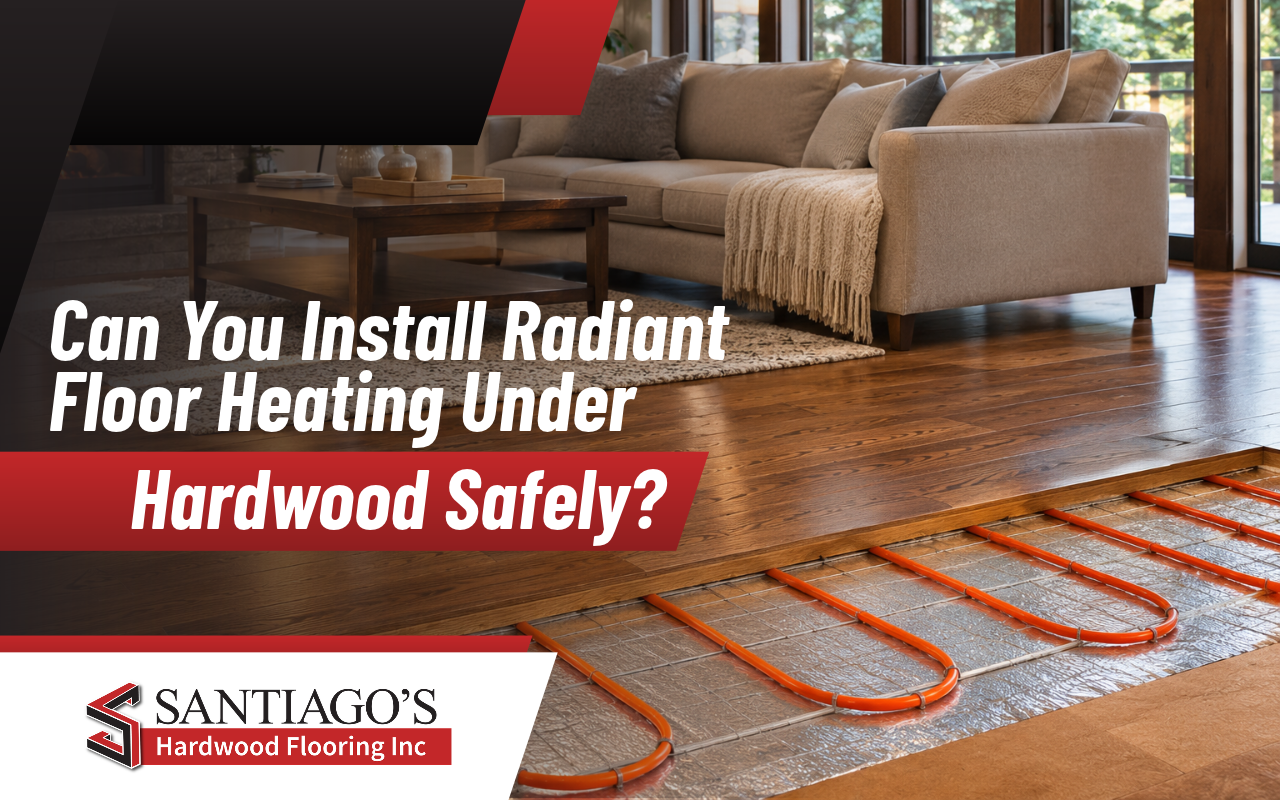
Yes, radiant floor heating under hardwood can be safe when the flooring manufacturer approves the heating system. Engineered hardwood is often preferred because its layered structure improves stability. However, certain solid hardwood products can also work. Proper subfloor preparation, controlled temperatures, and balanced indoor humidity help prevent gaps, warping, and other problems.
Discover How Radiant Heating Creates Comfortable Hardwood Floor Surfaces
Radiant heating warms rooms from the floor upward. Therefore, homeowners can enjoy gentle warmth without relying entirely on forced air.
The system transfers heat through equipment installed beneath the flooring. As a result, warmth spreads across the floor surface.
Two main heating systems are commonly used:
- Electric systems use heating wires or mats beneath suitable flooring.
- Hydronic systems circulate heated water through pipes under the floor.
Electric systems often suit smaller renovation areas. Meanwhile, hydronic systems may be practical for larger projects.
At Santiago’s Hardwood Flooring Inc, we encourage homeowners to confirm product compatibility before installation. Additionally, heating professionals should review the system design and temperature controls.
Ultimately, successful installation depends on matching the heating equipment with the selected hardwood.
Compare Engineered and Solid Hardwood for Better Heating Performance
When considering engineered hardwood vs solid for heated floors, understanding their construction is essential.
Solid hardwood comes from a single piece of wood. Consequently, it may expand or shrink as indoor moisture changes.
However, engineered hardwood contains several bonded layers. This construction generally improves stability during seasonal temperature and humidity changes.
Nevertheless, not every engineered flooring product supports radiant heating. Therefore, manufacturer approval remains necessary for both flooring types.
Solid hardwood can also work when the selected product and installation method meet heating requirements.
For additional guidance, explore our comparison of solid and engineered hardwood flooring.
At Santiago’s Hardwood Flooring Inc, we encourage homeowners to consider board thickness, installation requirements, and long-term maintenance.
Most importantly, choose flooring based on verified compatibility rather than appearance alone.
Select Suitable Wood Species to Support Lasting Floor Stability
Finding the best wood species for radiant floor heating involves balancing beauty, stability, and manufacturer recommendations.
Oak is a popular hardwood choice because of its familiar appearance and wide availability. However, not every oak flooring product supports radiant heating.
Other species may also work, depending on their construction and approved uses.
Before choosing your flooring, consider these factors:
- Confirm that the exact wood product supports radiant heating.
- Review board width and thickness recommendations.
- Check the manufacturer’s temperature and humidity limits.
- Consider durability, appearance, and everyday maintenance.
Additionally, wider boards may show seasonal movement more noticeably than narrower boards.
At Santiago’s Hardwood Flooring Inc, we believe thoughtful material selection helps homeowners enjoy attractive floors without unnecessary complications.
Therefore, always review the flooring specifications before making your final decision.
Evaluate Electric and Hydronic Systems for Reliable Home Heating
Electric and hydronic systems can both provide comfortable warmth beneath approved hardwood flooring.
Electric heating uses wires or mats controlled by a thermostat. Consequently, it is often considered for individual rooms.
Hydronic heating uses warm water circulating through hidden pipes. Therefore, it may suit larger spaces or extensive renovations.
However, the best option depends on your home’s insulation, room size, and existing heating equipment.
Furthermore, energy efficiency varies with system design and daily operation. Neither option automatically guarantees lower heating bills.
Before installation, ask a heating professional to review the planned system. Meanwhile, confirm the flooring manufacturer’s surface temperature limits.
Proper coordination between flooring and heating professionals helps prevent uneven warmth and avoidable wood movement.
Prepare Your Subfloor Properly Before Installing Heated Hardwood Floors
Careful preparation helps protect hardwood flooring from preventable installation problems.
First, inspect the subfloor for moisture, damage, and uneven areas. Next, confirm that the planned heating equipment supports your chosen flooring.
For a reliable installation, follow these essential steps:
- Inspect the subfloor and correct existing problems.
- Confirm compatibility between the flooring and heating system.
- Test heating equipment before covering it.
- Check moisture levels and follow acclimation instructions.
- Install hardwood using the manufacturer’s approved method.
- Start the heating system gradually when required.
Additionally, consider how new flooring layers may affect doors and transitions between rooms.
For homeowners planning engineered hardwood installation in Malvern, PA, local seasonal conditions deserve attention.
Explore our hardwood flooring installation services in Malvern to learn more about local flooring projects.
At Santiago’s Hardwood Flooring Inc, we value careful preparation because every successful floor begins with suitable conditions.
Maintain Stable Indoor Conditions to Protect Heated Wood Flooring
Hardwood naturally expands and contracts when moisture levels change. Therefore, steady indoor conditions help maintain its appearance.
During winter, heated indoor air can become dry. Consequently, hardwood boards may shrink and develop small gaps.
However, excessive humidity may cause swelling, cupping, or other changes.
Use a humidity monitor to understand indoor conditions. Additionally, keep the floor within the manufacturer’s approved temperature range.
For more information, read our guide to humidity changes and hardwood flooring.
Furthermore, avoid sudden heating adjustments unless the equipment instructions specifically permit them.
At Santiago’s Hardwood Flooring Inc, we encourage homeowners to monitor their floors throughout the year.
As a result, changes in gaps or board edges can receive attention before problems become more serious.
Prevent Common Problems With Consistent Hardwood Floor Care
Even properly installed heated floors require regular care. Fortunately, simple habits can support long-term performance.
First, use cleaning products approved for the wood finish. Additionally, avoid soaking hardwood surfaces with water.
Some rugs and furniture arrangements may trap heat. Therefore, check flooring instructions before covering large heated areas.
Never drill into flooring without locating hidden heating wires or pipes.
Moreover, watch for uneven surfaces, widening gaps, or unusual warmth. These changes may indicate moisture or heating problems.
If your flooring begins to change shape, share your flooring concerns with our team.
Prompt attention can help identify the cause before repairs are considered.
Plan Your Hardwood Flooring Upgrade With Greater Confidence Today
Radiant floor heating under hardwood combines natural beauty with comfortable warmth when carefully planned.
However, success depends on compatible materials, proper installation, and controlled indoor conditions.
At Santiago’s Hardwood Flooring Inc, we believe homeowners deserve clear information before choosing new flooring.
Whether you prefer engineered or approved solid hardwood, understanding your options makes planning easier.
Therefore, if you are considering a flooring upgrade, discuss your hardwood flooring plans with us.
Together, we can review your flooring needs and discuss practical next steps for your home.
Frequently Asked Questions
Can you put solid hardwood over radiant heat?
Yes, some solid hardwood products support radiant heating. However, approval depends on the manufacturer and installation method. Therefore, review our guide to solid and engineered hardwood differences before choosing.
Which hardwood flooring handles temperature changes more effectively?
Engineered hardwood often offers better stability because of its layered construction. However, indoor moisture also affects performance. Our explanation of humidity effects on wood floors explores these changes.
How can homeowners protect heated hardwood during winter?
Maintain steady humidity, avoid sudden temperature changes, and use suitable cleaning methods. Additionally, follow our winter care recommendations for hardwood floors for seasonal protection.
Can excessive radiant heating cause hardwood floor damage?
Yes, excessive heating and poor moisture control may contribute to flooring damage. Therefore, investigate unusual movement promptly. Our guide to hardwood floor buckling causes explains related problems.
Where can I arrange hardwood flooring installation in Malvern?
At Santiago’s Hardwood Flooring Inc, we work with homeowners planning flooring projects in Malvern, PA. Explore our hardwood flooring installation options in Malvern to understand our services.
References: